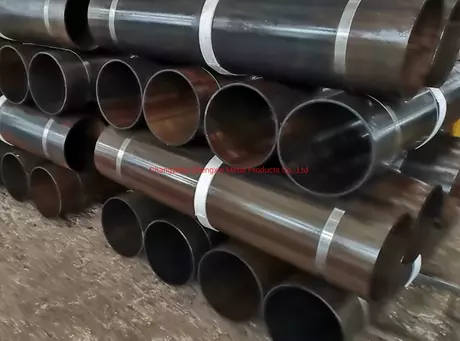
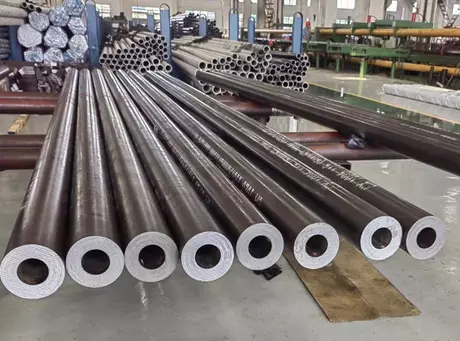
Hydraulic cylinders are the powerful actuators that drive motion in construction equipment, agricultural machinery, industrial presses, and countless other heavy-duty systems. At the core of every reliable hydraulic cylinder lies its barrel — the component that must withstand extreme pressure, maintain perfect alignment, and provide a smooth gliding surface for seals. This is where a Precision Cold Drawn Seamless Tube proves indispensable. Its unique combination of dimensional accuracy, enhanced strength, and superior surface quality makes it the preferred choice for manufacturers who demand long-term performance and minimal downtime.
Key Takeaways
Precision Cold Drawn Seamless Tube delivers tolerances as tight as ±0.05 mm, ensuring leak-free, high-pressure operation.
Cold drawing increases yield strength by up to 30% compared with hot-rolled alternatives, allowing cylinders to handle higher loads safely.
Exceptional surface finish (Ra ≤ 0.4 μm after final processing) dramatically extends seal life and reduces internal friction.
Seamless construction eliminates weak points, providing uniform strength under cyclic loading.
These tubes meet rigorous international standards such as ASTM A519, EN 10305-1, and DIN 2391, guaranteeing consistent quality.
Using the right Precision Cold Drawn Seamless Tube lowers machining costs and improves overall system efficiency.
What Are Precision Cold Drawn Seamless Tubes?
A Precision Cold Drawn Seamless Tube is manufactured by first piercing a solid steel billet to create a hollow tube, then repeatedly pulling it through precision dies at room temperature. This cold-working process refines the grain structure, improves dimensional accuracy, and enhances mechanical properties without the need for welding. The result is a tube with exceptionally consistent wall thickness and diameter — critical when the tube serves as the pressure-containing barrel of a hydraulic cylinder.
The Cold Drawing Process Explained in Simple Terms
Imagine starting with a hot-rolled tube that has slight variations in diameter and a rough inner surface. Through cold drawing, the tube is pulled through a series of dies (sometimes with a mandrel inside to control the bore). Each pass reduces the diameter slightly while lengthening the tube and smoothing the surface. Intermediate annealing may be used to restore ductility, but the final cold-drawn state delivers the precision required for hydraulic applications. According to the drawing process in manufacturing, this method achieves far tighter tolerances than hot forming alone.
Why Dimensional Precision Matters for Hydraulic Cylinders
Hydraulic systems operate at pressures often exceeding 200 bar. Even a 0.1 mm variation in diameter can cause misalignment, uneven wear on seals, or internal leakage. A Precision Cold Drawn Seamless Tube typically holds outer-diameter tolerances of ±0.05 mm to ±0.08 mm (depending on size) and inner-diameter tolerances suitable for H8/H9 fits after honing. This level of accuracy ensures the piston glides smoothly and the cylinder maintains structural integrity throughout millions of cycles.
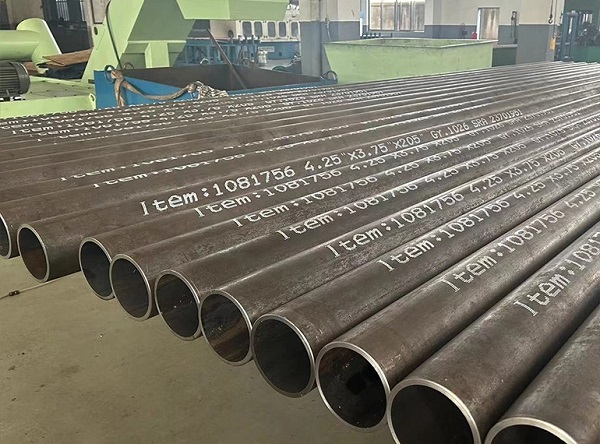
Superior Surface Finish and Seal Longevity
The inner surface of a Precision Cold Drawn Seamless Tube starts with a smooth finish from the drawing process and is often further refined by honing or skiving & roller burnishing. Typical roughness values reach Ra ≤ 0.4 μm — smooth enough to minimize friction and prevent premature seal damage. Rougher surfaces create microscopic peaks that act like sandpaper on seals, leading to leaks and costly downtime. The fine finish of these tubes directly translates into longer service intervals and lower maintenance costs.
Enhanced Strength Through Work Hardening
Cold drawing not only improves geometry but also strengthens the material via work hardening. For popular grades such as ST52 or E355, yield strength rises significantly — often to 355 MPa minimum — while maintaining good ductility. This extra strength allows designers to use thinner walls without sacrificing safety, reducing weight and material costs in mobile equipment.
Seamless Construction – No Weak Points
Unlike welded tubes, a seamless Precision Cold Drawn Seamless Tube has no longitudinal weld seam that could become a stress concentration or leak path under pressure. This uniform structure is especially important in high-pressure or high-cycle applications where fatigue resistance is paramount. The hydraulic cylinder barrel must endure repeated loading; seamless tubing provides the reliability engineers trust.
Typical Specifications at a Glance
| Property | Typical Hot-Rolled Tube | Precision Cold Drawn Seamless Tube |
|---|---|---|
| Outer Diameter Tolerance | ±0.5 mm or more | ±0.05 to ±0.08 mm |
| Inner Surface Roughness (Ra) | >3.2 μm | ≤0.4 μm (honed) |
| Yield Strength (ST52 grade example) | ~235 MPa | ≥355 MPa |
| Straightness | 1–2 mm/m | ≤0.5 mm/m |
| Standards Compliance | General pipe specs | ASTM A519, EN 10305-1, DIN 2391 |
Real-World Benefits for Equipment Owners
Operators of excavators, forklifts, or injection-molding machines notice the difference immediately: smoother operation, fewer leaks, and extended service intervals. Maintenance teams spend less time replacing seals or re-honing barrels. For OEMs, the consistent quality of Precision Cold Drawn Seamless Tube simplifies assembly and reduces scrap rates, ultimately lowering total cost of ownership.
Choosing the Right Tube for Your Application
Consider operating pressure, stroke length, environmental conditions, and required cycle life. Work with a supplier that offers a wide range of diameters (10 mm to 325 mm), wall thicknesses, and material grades (including ST35, ST52, E235, E355, and alloy options) to match exact requirements. Proper material selection and adherence to international standards ensure the cylinder performs reliably for years.
Conclusion
In summary, a Precision Cold Drawn Seamless Tube is far more than just a piece of pipe — it is the foundation of safe, efficient, and long-lasting hydraulic cylinders. Its precision tolerances, enhanced mechanical properties, smooth surface, and seamless integrity deliver measurable advantages in performance, reliability, and cost savings. When every component must perform flawlessly under pressure, there is simply no substitute for quality cold-drawn tubing.
For businesses seeking a dependable partner in sourcing high-quality Precision Cold Drawn Seamless Tube, CHENGXIN stands out as a trusted manufacturer with proven expertise since 2008 and a strong focus on hydraulic cylinder applications. Their comprehensive range, strict quality control, and customer-oriented service make them an excellent choice for reliable supply.
Frequently Asked Questions (FAQ)
What is a Precision Cold Drawn Seamless Tube?
It is a seamless steel tube produced by cold drawing at room temperature to achieve extremely tight dimensional tolerances and improved mechanical properties, ideal for high-pressure hydraulic applications.
Why can’t hot-rolled tubes be used directly in hydraulic cylinders?
Hot-rolled tubes have looser tolerances and rougher surfaces, leading to leaks, faster seal wear, and reduced strength under pressure. Cold drawing corrects these issues.
What surface finish is required for hydraulic cylinder barrels?
Most specifications call for Ra ≤ 0.4 μm on the inner bore to ensure optimal seal performance and minimal friction.
Which standards govern these tubes?
Key standards include ASTM A519 for mechanical tubing, EN 10305-1 for precision seamless cold-drawn tubes, and DIN 2391 for dimensional tolerances.
How much stronger is cold-drawn tubing?
Yield strength typically increases 20–30% compared with the starting hot-rolled material, allowing higher pressure ratings or thinner walls.
Can these tubes be custom-made?
Yes. Reputable suppliers offer custom OD/ID combinations, special lengths, and various steel grades to match exact cylinder designs.
How do I select a reliable supplier?
Look for manufacturers with years of experience, full traceability, adherence to international standards, and a proven track record in hydraulic cylinder tubing — such as CHENGXIN.
Article published March 2026. All technical data based on established industry standards and verified manufacturing practices.