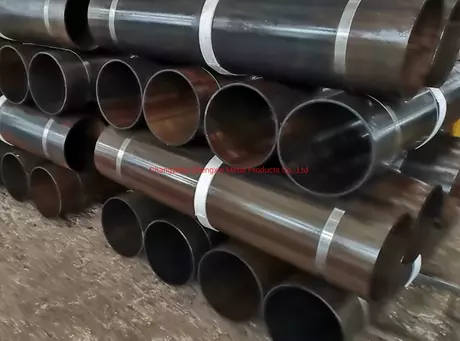
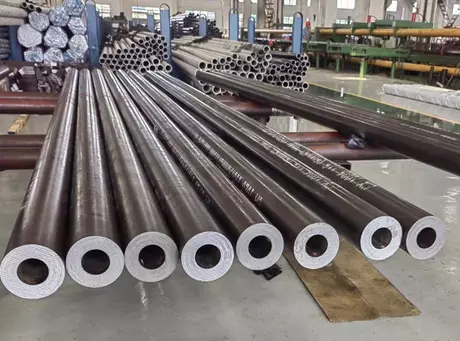
Choosing between seamless tube and welded steel tube options represents one of the most critical decisions in industrial manufacturing, construction, and engineering projects. While both types serve essential roles across diverse applications, understanding their fundamental differences in manufacturing processes, performance characteristics, and cost implications can significantly impact project outcomes.
Steel tubes form the backbone of countless industries, from hydraulic systems and automotive components to structural frameworks and oil and gas infrastructure. The distinction between seamless and welded variants extends beyond simple manufacturing methods—it encompasses strength profiles, dimensional precision, surface quality, and economic considerations that directly influence application suitability.
This comprehensive guide examines both tube types through multiple lenses: manufacturing processes, mechanical properties, industry applications, quality standards, and cost analysis. Whether engineers are specifying components for high-pressure hydraulic cylinders, procurement managers are optimizing supply chain decisions, or manufacturers are evaluating production capabilities, this comparison provides the clarity needed for informed decision-making.
Key Takeaways
Manufacturing Distinction: Seamless tubes are produced from solid billets through piercing and cold drawing, while welded tubes are formed from steel strips joined by electric resistance welding (ERW) or drawn over mandrel (DOM) processes.
Strength Characteristics: Seamless tubes excel in high-pressure applications with uniform wall thickness, while DOM welded tubes offer comparable performance at 15-30% lower cost for many applications.
Dimensional Precision: Cold drawn seamless tubes provide exceptional concentricity and tight tolerances meeting ASTM A519 and EN 10305-1 standards, whereas DOM tubes conforming to EN 10305-2 deliver excellent surface finish through mandrel drawing.
Application Suitability: Seamless tubes dominate critical high-pressure systems and aerospace components, while welded steel tubes serve effectively in automotive, structural, and moderate-pressure hydraulic applications.
Cost Considerations: Welded tubes present significant economic advantages for projects where weld seam limitations pose minimal risk, optimizing budget allocation without sacrificing essential performance requirements.
Understanding Seamless Tube Manufacturing
The seamless tube production process begins with carefully selected steel billets, typically manufactured from carbon or alloy steel grades. These solid cylindrical pieces undergo heating in specialized furnaces to temperatures exceeding 1200°C, making the material malleable for subsequent forming operations.
The Piercing and Hot Rolling Process
Heated billets pass through rotary piercing mills where a piercing mandrel creates the initial hollow tube form. This critical step transforms solid steel into a thick-walled hollow shell without introducing any seams or welds. The pierced tube then undergoes elongation through rolling mills, gradually reducing wall thickness while increasing length to approach target dimensions.
Cold Drawing for Precision
After hot forming, tubes destined for precision applications enter the cold drawing phase. This room-temperature process pulls the tube through progressively smaller dies while simultaneously drawing over an internal mandrel. Cold drawing achieves several critical objectives: dimensional accuracy to tight tolerances, improved surface finish with reduced roughness, enhanced mechanical properties including increased tensile strength, and uniform wall thickness distribution.
According to manufacturing data, cold drawn seamless tubes achieve outside diameter tolerances of ±0.2mm and wall thickness variations below 10% of nominal specification. The cold working process increases yield strength by 15-25% compared to hot-finished tubes while maintaining excellent ductility for downstream forming operations.
Quality Standards for Seamless Tubes
Seamless tube production adheres to rigorous international standards. ASTM A519 governs carbon and alloy steel mechanical tubing specifications in North America, covering grades from low-carbon MT 1010 through high-strength alloy steels like SAE 4140 and 4340. European manufacturers follow EN 10305-1 standards for cold drawn seamless precision tubes, specifying grades E195 through E355 and alloy variants including 42CrMo4.
These standards mandate comprehensive testing protocols including dimensional verification, tensile strength testing, hardness measurements, and non-destructive examination techniques such as ultrasonic or eddy current testing to ensure internal soundness.
Welded Steel Tube Manufacturing Processes
Welded steel tube production begins with flat-rolled steel coils or strips, offering material efficiency advantages over the solid billets required for seamless manufacturing. The welding approach fundamentally differs from seamless production, creating tubes through forming and joining operations rather than piercing solid material.
Electric Resistance Welding (ERW)
The ERW process forms the foundation of modern welded tube manufacturing. Steel strip passes through precision roller sets that progressively form the flat material into a cylindrical shape with edges aligned for welding. High-frequency electrical current flows through the steel, generating intense localized heating at the edges. As the heated edges reach welding temperature, pressure rollers force them together, creating a solid-state weld without filler material.
External and internal weld flash—excess material squeezed from the weld zone—is removed through scarfing tools. However, standard ERW tubes retain internal flash, which may impact applications requiring smooth interior surfaces or precise internal dimensions.
Drawn Over Mandrel (DOM) Process
DOM represents an enhanced welded tube manufacturing method that addresses ERW limitations. Starting with an ERW tube, the DOM process removes all internal weld flash before cold drawing the tube through dies and over a mandrel. This additional processing delivers several key improvements: complete elimination of internal weld irregularities, enhanced concentricity between outer and inner diameters, improved surface finish on both ID and OD, and mechanical property enhancement through cold working.
DOM tubes meet EN 10305-2 specifications for cold drawn welded precision tubes, offering performance characteristics that approach seamless tube quality while maintaining cost advantages associated with welded production. The cold drawing operation increases tensile strength by 20-30% compared to as-welded ERW tubes.
Welded Tube Standards and Grades
EN 10305-2 establishes technical delivery conditions for welded cold drawn tubes, covering steel grades E195, E235, E275, and E355. These specifications ensure welded tubes meet stringent requirements for dimensional tolerance, surface quality, and mechanical properties suitable for demanding applications including automotive components, hydraulic cylinders, and structural members.
Need Expert Guidance on Tube Selection?
CHENGXIN's engineering team provides technical consultation to help you choose between seamless and welded solutions based on your specific application requirements, pressure ratings, and budget constraints.
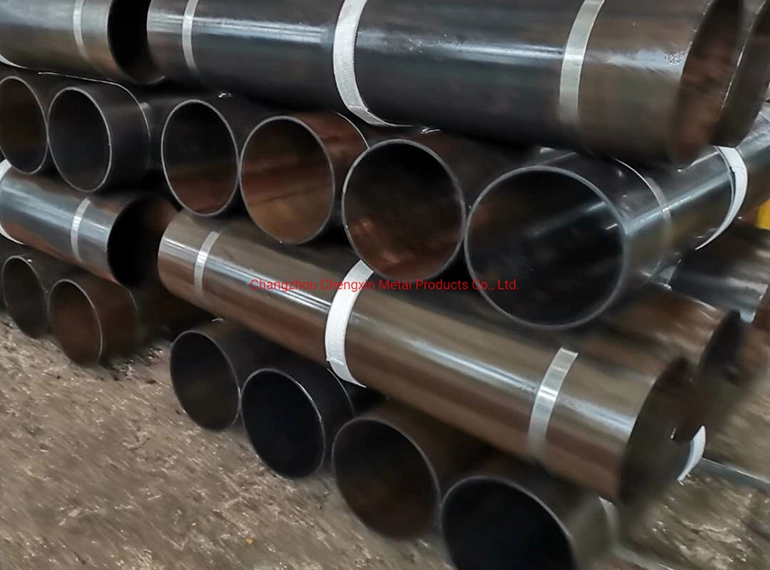
Comprehensive Performance Comparison
| Characteristic | Seamless Tube | Welded Steel Tube (DOM) |
|---|---|---|
| Manufacturing Process | Piercing solid billet, hot rolling, cold drawing | ERW forming from strip, cold drawing over mandrel |
| Weld Seam | None - completely seamless structure | Longitudinal weld, flash removed in DOM process |
| Wall Thickness Uniformity | Excellent - variation typically 5-10% | Very good - variation typically 8-12% |
| Maximum Pressure Rating | Superior - ideal for pressures above 5000 PSI | Very good - suitable for pressures up to 4000 PSI |
| Size Range | OD 10mm-325mm (ASTM A519 up to 12.75") | OD 20mm-356mm (EN 10305-2) |
| Surface Finish | Excellent (Ra 0.8-1.6 μm after cold drawing) | Excellent (Ra 0.8-1.6 μm after DOM processing) |
| Concentricity | Outstanding - critical for precision applications | Very good - improved significantly by mandrel |
| Typical Cost Index | 100 (baseline) | 70-85 (15-30% lower) |
| Lead Time | Longer - complex multi-stage process | Shorter - fewer processing stages |
| Common Standards | ASTM A519, EN 10305-1, DIN 2391 | EN 10305-2, ASTM A513 |
Mechanical Properties and Strength Analysis
Understanding the mechanical characteristics of each tube type proves essential for proper application selection and safety assurance. While both seamless and welded tubes can achieve high strength levels, their performance profiles differ in specific scenarios.
Tensile and Yield Strength
Cold drawn seamless tubes manufactured from SAE 1045 carbon steel typically exhibit tensile strengths of 570-700 MPa with yield strengths ranging from 310-380 MPa in the normalized condition. Heat treatment can elevate these values significantly—quenched and tempered 4140 alloy seamless tubes achieve tensile strengths exceeding 1000 MPa.
DOM welded tubes from comparable materials demonstrate similar strength ranges in base metal zones. However, the weld seam region may exhibit slightly different properties depending on welding parameters and post-weld heat treatment. Quality DOM processing ensures weld zone strength matches or exceeds base metal strength through proper thermal cycling and cold working.
Pressure Resistance and Burst Strength
For high-pressure hydraulic applications, seamless tubes offer inherent advantages. The absence of a weld seam eliminates potential weak points, allowing uniform stress distribution across the entire tube circumference. Hydraulic cylinders operating at pressures of 5000-10000 PSI typically specify seamless construction to ensure safety margins and long service life.
DOM welded tubes perform excellently in moderate-pressure applications up to 4000 PSI. Modern ERW and DOM processes produce weld zones with strengths comparable to base material, making these tubes suitable for automotive hydraulic systems, pneumatic cylinders, and structural applications where pressure demands remain within specified limits.
Fatigue Resistance
Cyclic loading applications such as shock absorbers and reciprocating machinery demand excellent fatigue resistance. Seamless tubes excel in these applications due to uniform material properties and the absence of stress concentrations associated with weld seams. The continuous grain structure throughout the tube wall provides consistent fatigue life predictions.
High-quality DOM tubes with properly processed weld seams can deliver acceptable fatigue performance for many applications. The key lies in complete weld flash removal and appropriate cold working to refine the weld zone microstructure. Applications involving severe cyclic loading or stress reversals generally favor seamless construction for maximum reliability.
Industrial Applications and Use Cases
Hydraulic and Pneumatic Systems
Hydraulic cylinder manufacturing represents a major application area where tube selection significantly impacts performance and safety. Heavy equipment manufacturers typically specify cold drawn seamless tubes for main cylinders operating above 3500 PSI. The uniform wall thickness and seamless construction ensure reliable performance under extreme pressures and cyclic loading conditions common in construction machinery, material handling equipment, and industrial presses.
Pneumatic systems operating at lower pressures (100-200 PSI) frequently utilize DOM welded tubes. The cost savings compared to seamless alternatives allow manufacturers to optimize component costs without compromising safety or functionality. Automotive pneumatic cylinders, automated machinery, and compressed air distribution systems commonly employ DOM tubes meeting EN 10305-2 specifications.
Automotive Industry Applications
The automotive sector consumes vast quantities of both seamless and welded steel tubes across diverse applications. Steering columns, shock absorber bodies, and drive shafts often utilize DOM welded tubes due to excellent surface finish, precise dimensional control, and cost effectiveness. The automotive industry's volume requirements and competitive pricing pressures make welded tube solutions particularly attractive where performance requirements align with DOM capabilities.
Critical safety components and high-performance applications may specify seamless tubes. Racing vehicle roll cages, high-pressure fuel injection rails, and turbocharger housings frequently employ seamless construction to maximize strength-to-weight ratios and ensure absolute reliability under extreme operating conditions.
Oil and Gas Infrastructure
Exploration and production operations demand tubes capable of withstanding harsh environments, corrosive fluids, and high pressures. Seamless tubes manufactured from alloy steels dominate this sector, particularly for critical applications such as well casing, production tubing, and high-pressure fluid transmission lines. The seamless structure provides essential reliability for operations where failure consequences include environmental damage, production loss, and safety risks.
Construction and Structural Engineering
Structural applications including building frameworks, scaffolding, and architectural elements commonly utilize welded steel tubes. The load-bearing requirements typically involve static or slowly-varying forces rather than high internal pressures, making ERW and DOM tubes ideal choices. Cost optimization drives structural tube selection, with welded variants providing excellent strength-per-dollar value for these applications.
Ready to Source High-Quality Steel Tubes?
CHENGXIN manufactures both seamless and welded tubes to international standards including ASTM A519, EN 10305-1, and EN 10305-2. Our engineering support helps you specify the optimal solution for your application.
Cost Analysis and Economic Considerations
Material cost represents just one component of total project economics. Comprehensive cost analysis must consider initial material pricing, processing requirements, failure risks, and lifecycle costs to determine true economic impact.
Base Material Pricing
Seamless tube pricing typically runs 15-30% higher than comparable welded tubes due to more complex manufacturing processes, higher energy consumption, and greater material waste during production. A cold drawn seamless tube in SAE 1026 grade might cost $2.80-3.20 per kilogram, while an EN 10305-2 DOM tube in comparable E235 grade costs $2.00-2.50 per kilogram at equivalent volumes.
Volume requirements significantly impact pricing. Large-quantity orders benefit from economies of scale, though welded tubes maintain cost advantages across all volume ranges. Custom sizes or special material grades command premium pricing regardless of manufacturing method, making standard sizes more economical when design flexibility permits.
Processing and Fabrication Costs
Both tube types machine similarly, though seamless tubes may offer slight advantages in applications requiring tight internal diameter tolerances. The uniform wall thickness of seamless tubes can reduce machining time for components requiring precision boring operations. DOM tubes provide excellent machining characteristics after weld flash removal, performing comparably to seamless tubes in most fabrication operations.
Risk and Lifecycle Economics
Applications involving high pressures, critical safety requirements, or severe service conditions justify premium pricing for seamless construction. The cost of hydraulic system failure in heavy equipment—including downtime, repair expenses, and potential safety incidents—far exceeds the incremental material cost difference. In these scenarios, seamless tubes deliver superior value through enhanced reliability and extended service life.
Conversely, moderate-duty applications benefit economically from welded tube selection. Structural members, low-pressure systems, and non-critical components achieve optimal value with DOM tubes, allowing budget allocation toward other project priorities without compromising essential performance requirements.
Quality Control and Testing Standards
Regardless of manufacturing method, comprehensive quality assurance ensures tubes meet application requirements and safety standards. Both seamless and welded tubes undergo rigorous testing protocols throughout production.
Dimensional Verification
Precision measurement equipment verifies outside diameter, wall thickness, and length specifications against standard tolerances. Cold drawn seamless tubes meeting ASTM A519 specifications achieve OD tolerances of ±0.5% with wall thickness variations held to ±10% of nominal. EN 10305-1 standards specify even tighter tolerances for precision applications, with OD tolerance classes as tight as ±0.2mm for smaller diameters.
DOM welded tubes conforming to EN 10305-2 deliver comparable dimensional precision after cold drawing operations. Wall thickness monitoring throughout production ensures consistent quality, with automated measurement systems detecting variations before tubes leave manufacturing facilities.
Mechanical Property Testing
Tensile testing validates yield strength, ultimate tensile strength, and elongation properties against specification requirements. Test samples taken from production lots undergo testing per ASTM A370 or equivalent standards, with results documented on material test certificates (MTCs) accompanying shipments.
Hardness testing provides rapid assessment of mechanical properties and heat treatment effectiveness. Rockwell or Brinell hardness values correlate with tensile properties, allowing non-destructive verification of material condition.
Non-Destructive Examination
Critical applications mandate non-destructive testing (NDT) to detect internal defects invisible to visual inspection. Ultrasonic testing identifies inclusions, voids, or laminations within tube walls. Eddy current testing proves particularly effective for detecting surface and near-surface discontinuities in both seamless and welded tubes.
Welded tubes undergo additional weld seam verification. Continuous automated testing systems inspect weld quality during production, with suspect sections removed before final processing. High-quality manufacturers employ multiple testing methods to ensure weld integrity meets or exceeds base material properties.
Material Selection Guidelines
Selecting between seamless tube and welded steel tube variants requires systematic evaluation of application requirements against material capabilities. This decision framework helps engineers and procurement professionals make informed choices.
Pressure Requirements
Applications requiring operating pressures above 4000 PSI generally favor seamless construction. The uniform wall thickness and absence of weld seams provide maximum safety factors for high-pressure hydraulic systems, pneumatic tools, and fluid power applications.
Systems operating below 3500 PSI with stable pressure profiles can effectively utilize DOM welded tubes. Modern welding processes and quality control ensure weld seam strength matches base material properties, providing reliable service within specified pressure ranges.
Dimensional Precision
Components requiring exceptional concentricity between inner and outer diameters—such as hydraulic cylinder barrels for honing or precision mechanical assemblies—benefit from seamless tube construction. The manufacturing process inherently produces superior roundness and concentricity compared to welded alternatives.
DOM tubes offer excellent dimensional control suitable for most precision applications. The mandrel drawing process significantly improves concentricity compared to standard ERW tubes, making DOM variants appropriate for automotive components, precision machinery, and general mechanical assemblies.
Cyclic Loading and Fatigue
Applications involving repeated stress cycles, reciprocating motion, or dynamic loading conditions favor seamless tubes. The continuous grain structure without weld seams provides consistent fatigue resistance and predictable service life under variable loading.
Static or slowly-varying loads accommodate welded tube construction effectively. Structural applications, stationary pressure vessels, and components experiencing minimal cyclic stress perform satisfactorily with DOM tubes at lower cost than seamless alternatives.
Budget and Volume Considerations
Projects with strict budget constraints benefit from welded tube selection where performance requirements permit. The 15-30% cost differential versus seamless tubes allows larger quantities or upgraded specifications in other project areas.
High-volume applications amplify cost differences, making welded tubes particularly attractive for automotive manufacturers, appliance producers, and other industries with significant tube consumption. Custom tooling investments for welded tube production amortize effectively across large production runs.
Making the Right Choice
The seamless versus welded steel tube decision ultimately depends on specific application requirements rather than categorical superiority of either type. Seamless tubes excel in high-pressure, critical-safety, and severe-duty applications where uniform properties and maximum reliability justify premium pricing. Welded steel tubes, particularly DOM variants, provide excellent performance for moderate-pressure systems, structural applications, and cost-sensitive projects without compromising essential quality requirements.
Successful tube selection balances technical requirements, economic constraints, and risk assessment. Working with experienced manufacturers like CHENGXIN who produce both seamless and welded tubes to international standards ensures access to technical expertise, quality assurance, and optimal solutions for diverse applications.
Frequently Asked Questions
Partner with a Trusted Steel Tube Manufacturer
CHENGXIN produces premium seamless tubes (ASTM A519, EN 10305-1) and welded tubes (EN 10305-2, DOM) for hydraulic, automotive, and industrial applications worldwide. Our technical team provides specification assistance, quality certification, and reliable delivery.