close
Choose Your Site
Global
Social Media
Views: 0 Author: Site Editor Publish Time: 2025-02-27 Origin: Site


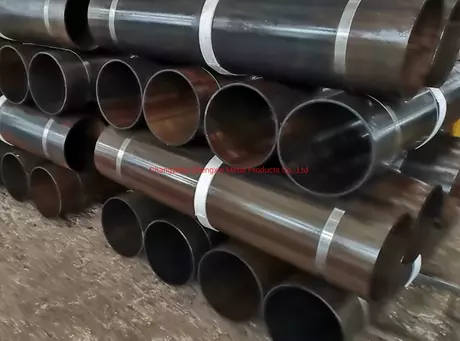
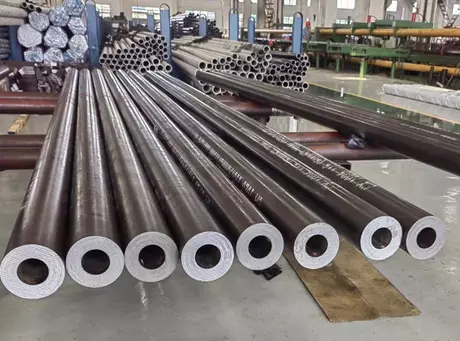
High Precision Steel Tubes play a crucial role in modern industries due to their exact dimensions and tight tolerances. These specialized tubes ensure high dimensional accuracy, which is vital for applications demanding precise measurements. Industries such as automotive, construction, and oil & gas rely heavily on these tubes. The market for precision steel tubes is expanding rapidly, with projections indicating a growth from USD 196.95 billion in 2024 to USD 310.8 billion by 2031. Available in seamless, welded, and drawn forms, each type offers distinct advantages, catering to diverse industrial needs.
High precision steel tubes stand out due to their exceptional dimensional accuracy. Manufacturers ensure that both the outer and inner diameters, as well as the wall thickness, meet stringent specifications. This precision is crucial for applications where exact measurements are non-negotiable. The tubes exhibit close tolerances, which means they maintain consistent dimensions throughout their length. This consistency is vital for industries like hydraulics and pneumatics, where even minor deviations can lead to significant performance issues. Additionally, the smooth surface finish of these tubes, achieved through advanced drawing technology, enhances their functionality and aesthetic appeal.
The choice of materials for high precision steel tubes significantly impacts their performance and suitability for various applications. These tubes are typically crafted from carbon steel, alloy steel, or stainless steel. Each material offers distinct advantages:
Carbon Steel: Known for its strength and durability, carbon steel is often used in applications requiring robust performance.
Alloy Steel: This material provides enhanced mechanical properties, making it suitable for demanding environments.
Stainless Steel: Renowned for its corrosion resistance, stainless steel is ideal for applications exposed to harsh conditions.
Manufacturers often employ processes like hot rolling or cold drawing to produce seamless tubes, ensuring high precision in dimensions and mechanical properties. This meticulous selection of materials and manufacturing techniques guarantees that high precision steel tubes meet the rigorous demands of modern industries.
The production of high precision steel tubes involves several meticulous steps to ensure their dimensional accuracy and surface quality. Manufacturers typically employ methods such as hot rolling, cold drawing, and cold rolling. Each method contributes to the tube's precision and quality.
Hot Rolling: This initial step involves heating the steel to a high temperature, making it malleable. The heated steel passes through rollers to achieve the desired thickness and shape. Hot rolling sets the foundation for further refinement.
Cold Drawing: After hot rolling, the steel undergoes cold drawing. This process involves pulling the steel through a die to reduce its diameter and improve its surface finish. Cold drawing enhances the tube's mechanical properties and ensures close tolerances.
Cold Rolling: In this step, the steel is further processed at room temperature. Cold rolling refines the tube's dimensions and surface quality. It also improves the tube's concentricity, ensuring uniform thickness throughout.
These steps collectively produce high precision steel tubes with exceptional smoothness and dimensional accuracy. The combination of these processes results in tubes that meet the rigorous demands of industries requiring precise measurements.
Quality control plays a vital role in the manufacturing of high precision steel tubes. Manufacturers implement stringent measures to ensure each tube meets industry standards and customer specifications.
Dimensional Inspection: Technicians measure the outer and inner diameters, as well as the wall thickness, to verify compliance with specified tolerances. This inspection ensures the tubes maintain consistent dimensions.
Surface Quality Assessment: The surface finish undergoes evaluation to detect any imperfections. A smooth surface is crucial for applications where friction and wear resistance are important.
Mechanical Testing: Tests assess the tube's yield strength, tensile strength, and elongation. These tests confirm the tube's ability to withstand operational stresses.
Non-Destructive Testing (NDT): Techniques such as ultrasonic testing and eddy current testing identify internal defects without damaging the tube. NDT ensures the structural integrity of the tubes.
By adhering to these quality control measures, manufacturers guarantee that high precision steel tubes deliver reliable performance in demanding applications.
High precision steel tubes find extensive use across various industries due to their exact dimensions and superior performance characteristics.
Automotive Industry: These tubes play a critical role in manufacturing components like fuel injection systems, drive shafts, and suspension systems. Their precise dimensions ensure optimal performance and safety in vehicles.
Aerospace Sector: In aerospace, precision steel tubes are essential for constructing aircraft frames, hydraulic systems, and fuel lines. Their high strength and durability make them ideal for withstanding the extreme conditions encountered during flight.
Mechanical Engineering: Precision tubes are integral to machinery and equipment, providing reliable performance in hydraulic and pneumatic systems. Their clean surface finish and corrosion resistance enhance the longevity and efficiency of mechanical components.
Medical Equipment: The medical field utilizes these tubes in devices such as surgical instruments and diagnostic equipment. Their biocompatibility and corrosion resistance ensure safety and reliability in medical applications.
Precision Instruments: Industries requiring high precision, such as electronics and instrumentation, rely on these tubes for their exact measurements and consistent quality.
"Precision steel tubes are directly used in mechanical parts, automobile and motorcycle parts, precision instruments, aviation, aerospace, and other fields with high precision requirements."
The advantages of high precision steel tubes extend beyond their dimensional accuracy, offering several benefits that enhance their appeal across industries.
High Strength and Durability: These tubes provide exceptional strength, making them suitable for demanding applications. Their durability ensures long-term performance, reducing the need for frequent replacements.
Corrosion Resistance: Many high precision tubes, especially those made from stainless steel, offer excellent resistance to corrosion. This property makes them ideal for use in harsh environments where exposure to moisture and chemicals is common.
Enhanced Surface Finish: The smooth surface finish of these tubes reduces friction and wear, improving the efficiency of systems in which they are used. This feature is particularly beneficial in hydraulic and pneumatic applications.
Technological Advancements: Ongoing advancements in manufacturing processes have enabled the production of tubes with greater precision and improved properties. These innovations contribute to the growing demand for high precision steel tubes in various sectors.
"Technological advancements in manufacturing processes of steel tubes are pivotal in driving market growth, enhancing efficiency, quality, and range of products."
By leveraging these advantages, industries can achieve higher efficiency, reliability, and performance in their operations, underscoring the value of high precision steel tubes in modern applications.
High precision steel tubes and seamless steel tubes differ significantly in their manufacturing processes. Precision steel tubes undergo cold drawing or cold rolling, which ensures high precision and smooth surfaces. This process results in tubes with no oxide film on their surfaces, making them suitable for applications requiring exact dimensions and smooth finishes. In contrast, seamless steel tubes may not meet the same precision requirements. They are typically produced through hot rolling, which does not achieve the same level of dimensional accuracy or surface quality as cold drawing or rolling.
Precision steel tubes also have higher tolerance requirements compared to seamless steel tubes. Manufacturers ensure that these tubes maintain consistent dimensions throughout their length, which is crucial for industries where precise measurements are essential. Seamless steel tubes, while strong and durable, may not offer the same level of precision and consistency.
The performance and applications of high precision steel tubes differ from those of seamless steel tubes due to their distinct characteristics. Precision steel tubes excel in applications requiring high pressure and complex deformations. Their precise dimensions and smooth surfaces make them ideal for use in hydraulic systems, automotive components, and aerospace applications, where exact measurements and superior performance are critical.
Seamless steel tubes, on the other hand, are often used in applications where strength and durability are more important than precision. They are commonly found in industries such as oil and gas, construction, and heavy machinery, where they provide reliable performance under harsh conditions.
In summary, while both high precision and seamless steel tubes offer unique benefits, their differences in manufacturing and performance make them suitable for different applications. Precision steel tubes provide unmatched accuracy and surface quality, making them indispensable in industries that demand exact measurements and high performance.
High Precision Steel Tubes serve as indispensable components across various industries, ensuring the safe and efficient operation of numerous systems and machinery. Their exact dimensions and superior performance make them essential in applications demanding high precision and accuracy. These tubes offer numerous benefits, including close tolerances on diameter and thickness, exceptional concentricity, and a smooth finish. Such characteristics allow designers to achieve flow uniformity under controlled conditions, while fabricators gain greater control over bending and alignment. As industries continue to evolve, the demand for these precision-engineered tubes is expected to grow, underscoring their critical role in modern engineering.