close
Choose Your Site
Global
Social Media
Views: 0 Author: Site Editor Publish Time: 2025-08-05 Origin: Site


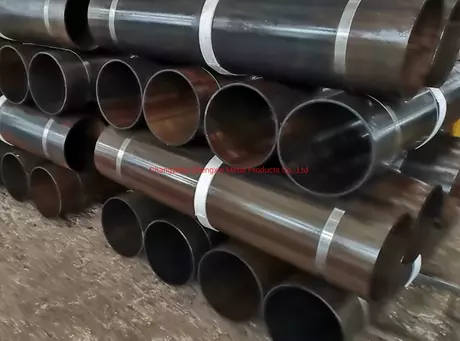
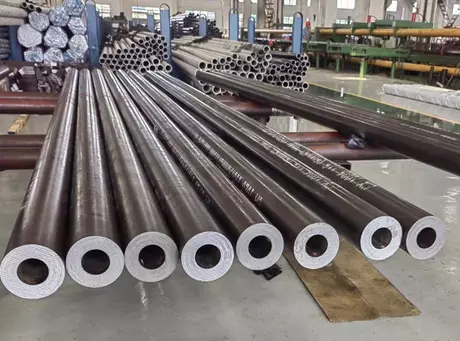
High precision steel tubes are specialized seamless or welded tubes manufactured to tight dimensional tolerances and superior surface quality. They are widely used in industries where accuracy, strength, and reliability are essential, such as automotive, hydraulic systems, and mechanical engineering. Their popularity continues to grow as modern machinery and equipment demand components with higher precision and performance.
Definition of High Precision Steel Tubes
High precision steel tubes are characterized by small dimensional tolerances, smooth internal and external surfaces, and uniform wall thickness. Compared with standard seamless steel tubes, precision tubes undergo additional processing steps to achieve higher accuracy. This ensures excellent mechanical performance, making them suitable for applications involving machining, hydraulic systems, or automotive components that require exact fits.
Manufacturing Process
The production of high precision steel tubes involves several key stages:
Raw Material Preparation – High-quality steel billets are selected as the base material. These billets typically contain low levels of impurities to ensure consistency in performance.
Piercing and Rolling – The billets are pierced to create hollow tubes, which are then hot rolled or cold drawn into smaller dimensions.
Cold Drawing – To achieve tight dimensional tolerances and improved surface finish, the tubes undergo cold drawing. This process reduces diameter and wall thickness while enhancing strength and precision.
Heat Treatment – Precision tubes are often annealed or normalized to relieve stresses, improve ductility, and achieve the desired mechanical properties.
Surface Treatment – The internal and external surfaces of the tubes are treated through polishing, pickling, or phosphating, ensuring smoothness and corrosion resistance.
Quality Control – Each tube is inspected for dimensional accuracy, mechanical strength, and surface quality using advanced testing methods such as ultrasonic testing, eddy current testing, and dimensional measurement systems.
Key Characteristics
Tight dimensional tolerances (OD, ID, and wall thickness)
High strength and durability
Smooth surface finish suitable for machining
Excellent concentricity and roundness
Compatibility with various machining and coating processes
Applications
Because of their precision and reliability, high precision steel tubes are used in:
Automotive industry: drive shafts, steering systems, and fuel injection pipes.
Hydraulic systems: cylinder barrels, piston rods, and precision fittings.
Mechanical engineering: bearings, bushings, and machine tool components.
Energy sector: power station components and precision instruments.
Conclusion
High precision steel tubes are essential in industries that demand exact tolerances and reliable performance. Their advanced manufacturing process ensures superior quality, while their versatility makes them indispensable in automotive, hydraulic, and mechanical applications. With continuous improvements in steelmaking and processing technologies, precision steel tubes will remain a critical component in modern engineering.