close
Choose Your Site
Global
Social Media
Views: 0 Author: Site Editor Publish Time: 2026-03-10 Origin: Site


When engineers and procurement specialists search for high-performance tubing solutions, 25CrMo4 tube consistently emerges as a top choice for applications demanding exceptional strength and reliability. This comprehensive guide explains what makes this chromium-molybdenum alloy steel tube essential for modern manufacturing and engineering projects.
Material Grade: 25CrMo4 (also known as 1.7218) is a heat-treatable chromium-molybdenum alloy steel with superior mechanical properties
Common Equivalents: AISI 4130, SAE 4130, SCM430 (JIS), 25CD4 (AFNOR)
Tensile Strength Range: 700-1100 MPa depending on heat treatment condition
Primary Applications: Hydraulic cylinders, automotive components, pressure vessels, and mechanical engineering parts
Manufacturing Standard: EN 10305-1 for seamless cold drawn precision tubes
The 25CrMo4 material represents a carefully engineered alloy that combines carbon steel's affordability with the enhanced performance characteristics needed for demanding industrial applications. The designation breaks down simply: "25" indicates approximately 0.25% carbon content, while "CrMo4" reveals the presence of chromium and molybdenum as the primary alloying elements.
This alloy steel classification falls under European standard EN 10083-3 and carries the material number 1.7218. What sets this material apart is its ability to achieve high strength through heat treatment while maintaining good ductility and weldability—qualities that often conflict in lesser materials.

The chemical makeup of 25CrMo4 material is precisely controlled to deliver consistent performance:
| Element | Percentage Range | Purpose |
|---|---|---|
| Carbon (C) | 0.22 - 0.29% | Provides base strength and hardness |
| Chromium (Cr) | 0.9 - 1.2% | Enhances hardenability and wear resistance |
| Molybdenum (Mo) | 0.15 - 0.3% | Improves toughness and high-temperature strength |
| Manganese (Mn) | 0.6 - 0.9% | Increases tensile strength |
| Silicon (Si) | Max 0.4% | Acts as deoxidizer during manufacturing |
The mechanical performance of 25CrMo4 tube makes it indispensable for applications where failure is not an option. Understanding these properties helps engineers select the right material for their specific needs.
| Property | Quenched & Tempered (+QT) | Normalized (+N) | Annealed (+A) |
|---|---|---|---|
| Tensile Strength | 700-1100 MPa | 650-800 MPa | 580 MPa (min) |
| Yield Strength | 400-700 MPa | 345-355 MPa | 440 MPa (min) |
| Elongation | 12-16% | 18% | 19% |
| Impact Energy (20°C) | 45-50 J | - | - |
Note: Values vary based on tube diameter and wall thickness. Smaller sections typically achieve higher strength values.
These 25CrMo4 mechanical properties demonstrate why this material excels in high-stress applications. The quenched and tempered condition delivers maximum strength for components experiencing heavy loads, while the annealed condition offers superior formability for parts requiring complex shaping.
Global supply chains require understanding how 25CrMo4 equivalent material designations align across different national standards. This knowledge ensures engineers can source the correct material regardless of geographic location or supplier base.
| Standard/Country | Grade Designation | Material Number |
|---|---|---|
| European (EN) | 25CrMo4 | 1.7218 |
| USA (AISI/SAE) | AISI 4130 / SAE 4130 | G41300 |
| Japan (JIS) | SCM430 / SCM420 | - |
| France (AFNOR) | 25CD4 | - |
| UK (BS) | 708A25 / 708M25 | - |
| China (GB) | 30CrMo | - |
Important Note: While these grades are commonly considered equivalents, minor variations in chemical composition and mechanical properties may exist. Always verify specifications with your supplier and consult relevant standards for critical applications. For more detailed information on international steel equivalents, refer to authoritative databases like SteelNumber.
Quality 25CrMo4 tube production follows strict international standards that ensure dimensional accuracy, surface quality, and mechanical performance. The primary standard governing these precision tubes is EN 10305-1, which specifies requirements for seamless cold drawn tubes.
This European standard covers seamless cold drawn steel tubes with circular cross-sections up to 380mm outer diameter. Tubes manufactured according to EN 10305-1 are characterized by:
Precisely defined dimensional tolerances (typically ±0.08mm on outer diameter)
Specified maximum surface roughness for optimal performance
Controlled wall thickness variations (typically ±10%)
Superior straightness and concentricity
| Condition Code | Description | Typical Application |
|---|---|---|
| +N (Normalized) | Heat treated at 860-900°C, air cooled | General engineering applications |
| +QT (Quenched & Tempered) | Hardened and tempered for maximum strength | High-stress components |
| +SR (Stress Relieved) | Heat treated to reduce internal stresses | Precision machined parts |
| +A (Annealed) | Soft annealed for improved machinability | Parts requiring extensive machining |
The versatility of 25CrMo4 tube makes it the material of choice across multiple industries. Its combination of strength, toughness, and machinability opens doors to applications where other materials fall short.
Hydraulic cylinder manufacturers worldwide rely on 25CrMo4 tube for cylinder barrels. The material's high tensile strength handles operating pressures exceeding 350 bar, while its excellent surface finish ensures proper sealing and long service life. The tubes work seamlessly with honing or skiving and roller burnishing processes to achieve the tight internal diameter tolerances hydraulic applications demand.
Automotive engineers specify 25CrMo4 material for critical drivetrain components including drive shafts, transmission parts, and steering system components. The material's fatigue resistance ensures reliability under cyclic loading conditions typical in automotive applications.
From precision guide tubes in CNC machines to structural components in heavy equipment, this alloy steel delivers consistent performance. Its weldability allows fabricators to create complex assemblies without compromising strength at welded joints.
The material's ability to maintain mechanical properties at elevated temperatures (up to 450-530°C) makes it suitable for boiler tubes, turbine components, and high-temperature piping systems.
Get expert guidance and competitive quotes for your precision tube requirements. Our technical team can help you select the right specification for your application.
Request a Quote Now25CrMo4 tube machines well in the annealed condition. For best results, engineers should consider:
Using carbide tooling for quenched and tempered material
Applying adequate cooling during machining to prevent work hardening
Allowing for stress relieving after heavy machining operations
Planning machining before final heat treatment when possible
While 25CrMo4 material exhibits good weldability, proper procedures ensure optimal results. Preheat to 150-260°C before welding and maintain this temperature during the welding process. Low-hydrogen electrodes minimize the risk of cold cracking. Post-weld stress relief heat treatment at 580-680°C enhances joint integrity for critical applications.
Achieving desired mechanical properties requires careful heat treatment control:
Hardening: Heat to 840-870°C, quench in water or oil
Tempering: Heat to 540-680°C for at least one hour
Normalizing: Heat to 860-900°C, cool in air
Annealing: Heat to 680-720°C, slow cool
Reputable manufacturers provide comprehensive documentation with every 25CrMo4 tube delivery. Mill test certificates according to EN 10204 3.1 or 3.2 verify:
Chemical composition through cast analysis
Mechanical properties via tensile testing
Dimensional accuracy measurements
Non-destructive testing results when specified
Heat treatment records and conditions
Additional testing options include ultrasonic inspection for internal soundness, eddy current testing for surface defect detection, and hydrostatic pressure testing for tube integrity verification.
Not all 25CrMo4 tube suppliers deliver the same quality. When evaluating potential partners, consider these factors:
Manufacturing Capabilities: Look for suppliers with in-house cold drawing facilities and heat treatment equipment
Quality Systems: ISO 9001 certification demonstrates commitment to quality management
Technical Support: Access to metallurgical expertise helps optimize material selection
Inventory and Lead Times: Reliable availability minimizes project delays
Value-Added Services: Capabilities like cutting, machining, and surface treatments streamline your supply chain
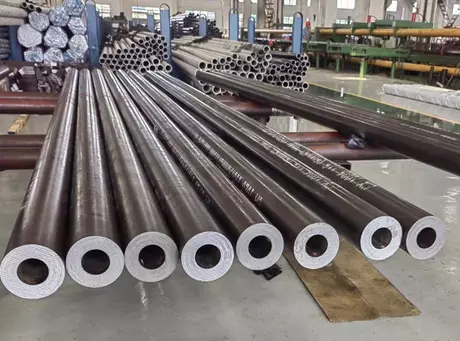
For manufacturers seeking a reliable partner in precision tube supply, CHENGXIN offers comprehensive solutions backed by over 15 years of industry experience. Their state-of-the-art production facilities in Changzhou, China, combine advanced cold drawing technology with rigorous quality control to deliver 25CrMo4 tube that meets the most demanding specifications. With annual production capacity exceeding 25,000 tons of cold drawn seamless tubes, they serve clients across automotive, hydraulic, and machinery sectors worldwide.
While 25CrMo4 tube carries a higher initial cost than plain carbon steel alternatives, a total cost of ownership analysis often reveals significant value:
Extended Service Life: Superior fatigue resistance reduces replacement frequency
Lighter Components: Higher strength allows thinner walls, reducing material consumption
Reduced Downtime: Reliability minimizes unplanned maintenance
Design Flexibility: Heat treatability enables optimization for specific applications
Modern steel production increasingly focuses on environmental responsibility. The chromium-molybdenum alloy content in 25CrMo4 material comes from recycled sources in many cases, and the material itself is fully recyclable at end of life. The extended service life of components made from this alloy steel reduces overall resource consumption compared to frequent replacement of lower-grade materials.
These grades are very similar, with 25CrMo4 being the European designation and AISI 4130 the American equivalent. Minor variations may exist in carbon content ranges (25CrMo4: 0.22-0.29% vs AISI 4130: 0.28-0.33%), making 25CrMo4 slightly more weldable while AISI 4130 may achieve marginally higher strength.
While 25CrMo4 has good weldability, best practices require preheating to 150-260°C and using low-hydrogen electrodes. Post-weld stress relief is recommended for critical applications. Following these procedures ensures strong, crack-free welds.
Quenching and tempering (+QT condition) delivers maximum strength, achieving tensile strengths of 900-1100 MPa for tube diameters up to 16mm. Larger sections reach 600-800 MPa depending on size. The exact strength depends on tempering temperature and time.
Thicker sections cool more slowly during heat treatment, resulting in lower achievable hardness and strength. For example, tubes under 16mm diameter can reach 900-1100 MPa tensile strength when quenched and tempered, while 100-160mm sections typically achieve 650-800 MPa.
Yes, this alloy performs well at elevated temperatures up to 450-530°C, making it suitable for boiler applications and power generation equipment. The molybdenum content provides creep resistance and maintains strength at temperature.
Standard cold drawn tubes have a bright finish. Additional options include honing (for hydraulic cylinders), skiving and roller burnishing (SRB), polishing, and coating with corrosion protection. Surface roughness typically ranges from Ra 0.4 to Ra 1.6 μm depending on the finish specified.
Request mill test certificates (EN 10204 3.1 or 3.2) that show chemical composition and mechanical properties. Reputable suppliers provide full traceability including heat numbers. For critical applications, consider third-party material verification through independent testing laboratories.
Understanding the complete picture of 25CrMo4 tube—from chemical composition and mechanical properties through equivalent materials and manufacturing standards—empowers engineers and procurement professionals to make informed decisions. This chromium-molybdenum alloy steel continues proving its value across industries demanding reliability, strength, and longevity.
Whether designing hydraulic systems, automotive components, or industrial machinery, 25CrMo4 material delivers the performance characteristics modern applications require. Its versatility through heat treatment, combined with excellent machinability and weldability, makes it a practical choice that balances engineering performance with manufacturing efficiency.
Success with this material begins with selecting quality suppliers who understand both the technical requirements and the practical challenges of modern manufacturing. Partners who invest in advanced production equipment, maintain rigorous quality systems, and provide comprehensive technical support help ensure your projects achieve their full potential.
About the Manufacturer: CHENGXIN specializes in precision cold drawn seamless tubes, including 25CrMo4 and equivalent grades. With advanced manufacturing facilities and comprehensive quality control systems, they deliver reliable solutions for hydraulic, automotive, and engineering applications worldwide.
Contact: www.czchengxin.com | Email: jianjun.c@czchengxin.com