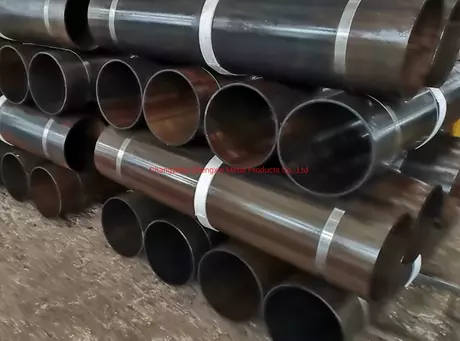
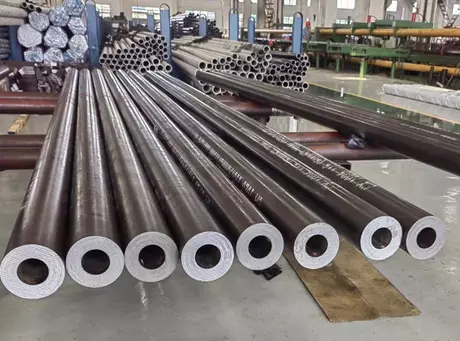
In today's precision-driven industrial landscape, manufacturers increasingly rely on components that deliver exceptional strength, accuracy, and reliability. Among these critical materials, cold drawn seamless steel tubes have emerged as indispensable solutions across multiple sectors. These precision-engineered tubes combine superior mechanical properties with dimensional accuracy, making them the preferred choice for applications where performance cannot be compromised.
The manufacturing process behind these tubes involves drawing steel through precisely calibrated dies at room temperature, creating products with enhanced strength characteristics and exceptionally smooth surfaces. This method produces seamless steel tubes that outperform traditional welded alternatives in demanding environments. Understanding their diverse applications helps industry professionals make informed material selections that optimize both performance and cost-effectiveness.
Key Takeaways
Cold drawn seamless steel tubes offer superior dimensional accuracy with tolerances typically within ±0.05-0.10mm
These tubes provide tensile strength ranging from 440-930 MPa depending on steel grade and processing
Applications span automotive, hydraulic systems, aerospace, construction, and energy sectors
The cold drawing process enhances surface finish to Ra 0.8-1.6 μm without additional machining
Seamless construction eliminates weak points found in welded tubes, improving pressure resistance by 30-40%
Material versatility includes carbon steel, alloy steel, and stainless steel grades for diverse applications
Understanding Cold Drawn Seamless Steel Tube Manufacturing
The production of cold drawn steel begins with hot-rolled seamless tube blanks that undergo a transformation process at ambient temperatures. Manufacturers pull these blanks through hardened dies that reduce the outer diameter while simultaneously thinning the wall thickness. This mechanical working process creates significant improvements in the material's microstructure, resulting in enhanced mechanical properties.
During cold drawing, the steel experiences work hardening that increases yield strength by 60-80% and tensile strength by 25-30% compared to hot-rolled equivalents. The process also imparts a smooth, oxide-free surface finish that eliminates the need for additional machining in many applications. According to ASTM A519 specifications, the controlled deformation improves grain structure uniformity, contributing to more predictable material performance.

Material Grades and Specifications
These tubes are manufactured from various steel grades to meet specific application requirements. Common materials include low-carbon steels such as AISI 1020, medium-carbon grades including 4130 and 4140, and high-strength alloy steels like 4340. Each grade offers distinct properties suited to particular operational demands, from general structural applications to high-stress environments requiring superior fatigue resistance.
| Steel Grade | Carbon Content (%) | Tensile Strength (MPa) | Primary Applications |
|---|---|---|---|
| AISI 1020 | 0.18-0.23 | 440-520 | General mechanical components |
| AISI 4130 | 0.28-0.33 | 560-850 | Aircraft structures, hydraulic systems |
| AISI 4140 | 0.38-0.43 | 655-850 | High-strength shafts, cylinders |
| AISI 4340 | 0.38-0.43 | 745-930 | Aerospace, heavy machinery |
Automotive Industry Applications
The automotive sector represents one of the largest consumers of seamless steel tubes, utilizing them in numerous critical systems. Modern vehicles incorporate these tubes in fuel injection systems, brake lines, power steering assemblies, and chassis components. The automotive industry particularly values the dimensional consistency that cold drawn tubes provide, as even minor variations can compromise system performance or safety.
In fuel delivery systems, cold drawn seamless steel tubes handle pressures exceeding 2,000 PSI in direct injection applications. The seamless construction eliminates potential failure points that welded seams might create under such demanding conditions. Industry standards developed by SAE International specify these tubes for applications requiring leak-proof performance and resistance to vibration-induced fatigue.
Precision Steering and Suspension Components
Power steering systems rely on cold drawn steel tubes to transmit hydraulic pressure efficiently between the pump, control valve, and steering gear. These tubes must maintain precise internal dimensions to ensure proper fluid flow characteristics while withstanding continuous pressure cycling. The smooth interior surface achieved through cold drawing minimizes turbulence and pressure drops, improving system responsiveness.
Similarly, suspension systems in high-performance vehicles incorporate these tubes in adjustable damper assemblies and air suspension components. The tubes must handle dynamic loading while maintaining structural integrity across wide temperature ranges encountered during vehicle operation.
Hydraulic and Pneumatic System Installations
Industrial hydraulic systems depend heavily on seamless steel tubes for fluid power transmission. These applications demand tubes capable of withstanding pressures ranging from 3,000 to 10,000 PSI while maintaining flexibility for routing through complex machinery. Cold drawn seamless tubes meet these requirements while offering superior fatigue resistance compared to welded alternatives.
Manufacturers of construction equipment, agricultural machinery, and industrial presses specify these tubes for hydraulic cylinders and high-pressure lines. The uniform wall thickness achieved through cold drawing ensures consistent burst strength around the entire circumference, a critical safety factor in hydraulic applications.
| Application Type | Typical Pressure Range (PSI) | Wall Thickness Range | Common Outer Diameters |
|---|---|---|---|
| Low-pressure hydraulics | 1,000-3,000 | 1.5-3.0 mm | 6-25 mm |
| Medium-pressure systems | 3,000-6,000 | 2.5-4.0 mm | 10-40 mm |
| High-pressure applications | 6,000-10,000 | 3.5-6.0 mm | 15-50 mm |
Aerospace and Defense Applications
The aerospace industry imposes the most stringent requirements on material performance, and cold drawn seamless steel tubes consistently meet these demanding specifications. Aircraft hydraulic systems, landing gear assemblies, and fuel distribution networks all utilize these precision tubes. The aerospace sector requires materials that combine high strength-to-weight ratios with exceptional reliability, as component failures can have catastrophic consequences.
Aircraft manufacturers specify alloy steel grades like AISI 4130 and 4340 for structural tubing applications. These materials provide the necessary strength while remaining weldable for assembly purposes. The tubes undergo additional quality control measures including ultrasonic testing and magnetic particle inspection to detect any subsurface defects that could compromise performance at altitude.
Space-Grade Specifications
Rocket propulsion systems and satellite structures represent the most demanding applications for seamless steel tubes. These components must function reliably in extreme temperature variations, from cryogenic propellant handling to the thermal cycling experienced in space. Cold drawn tubes manufactured to aerospace specifications undergo rigorous testing protocols that verify material properties, dimensional accuracy, and surface integrity.
Construction and Structural Engineering Uses
The construction industry employs cold drawn seamless steel tubes in both temporary and permanent structural applications. Scaffolding systems utilize these tubes due to their consistent wall thickness and predictable load-bearing capacity. The dimensional accuracy allows for precise fitting of coupling components, improving assembly efficiency on construction sites.
Architectural applications increasingly incorporate exposed steel tube structures in modern building designs. Cold drawn tubes provide the aesthetic appeal of smooth, uniform surfaces while meeting structural load requirements. These applications benefit from the tubes' corrosion resistance when properly finished, extending service life in exposed environments.
Geothermal heat pump installations use seamless steel tubes as ground loop heat exchangers. The tubes must resist corrosion from soil contact while maintaining structural integrity during installation and decades of thermal cycling. The seamless construction eliminates potential leak paths that could compromise system efficiency.
Energy Sector and Oil & Gas Industry
Energy production and distribution systems rely extensively on seamless steel tubes for transporting fluids under extreme conditions. Oil and gas extraction operations use these tubes in downhole applications where they encounter high pressures, corrosive environments, and abrasive fluids. The seamless construction provides superior resistance to stress corrosion cracking compared to welded tubes.
Refineries and petrochemical plants incorporate cold drawn tubes in heat exchangers, boiler systems, and process piping. These applications often involve elevated temperatures combined with corrosive media, requiring materials that maintain mechanical properties under thermal stress.
Renewable Energy Applications
Wind turbine hydraulic systems use cold drawn seamless steel tubes in pitch control mechanisms and yaw drives. These systems must operate reliably across wide temperature ranges while enduring continuous motion cycles. The tubes' fatigue resistance proves essential in these demanding applications where maintenance access is limited and costly.
Precision Mechanical and Manufacturing Equipment
Machine tool builders incorporate seamless steel tubes in precision linear motion systems, including guide rails and ball screw housings. The dimensional accuracy of cold drawn tubes allows them to serve as precision bores without additional machining operations. This application requires straightness tolerances typically within 0.5mm per meter of length.
Robotic systems and automated manufacturing equipment utilize these tubes in pneumatic actuators and structural frameworks. The consistent material properties ensure predictable performance in computer-controlled positioning systems where repeatability is critical. The tubes must maintain dimensional stability across operating temperatures to preserve positioning accuracy.
Material Selection Considerations for Different Applications
Selecting the appropriate cold drawn seamless steel tube requires evaluating multiple factors including operating pressure, temperature range, corrosive environment exposure, and dimensional requirements. Engineers must balance material costs against performance requirements and expected service life.
For general mechanical applications operating at ambient temperatures with minimal corrosive exposure, low-carbon steel grades provide adequate performance at the lowest cost. Applications involving elevated temperatures or corrosive environments benefit from alloy steel grades with enhanced chromium and molybdenum content. These alloying elements improve oxidation resistance and maintain strength at elevated temperatures.
| Application Environment | Recommended Steel Type | Key Performance Factor | Typical Cost Premium |
|---|---|---|---|
| Standard mechanical | Low-carbon (1020) | General strength | Baseline |
| High-pressure hydraulic | Medium-carbon (4130) | Pressure resistance | +25-35% |
| Corrosive environments | Alloy steel (4140) | Corrosion resistance | +40-60% |
| Extreme conditions | High-alloy (4340) | Fatigue strength | +70-90% |
Quality Standards and Testing Requirements
International standards govern the production and testing of cold drawn seamless steel tubes to ensure consistent quality across manufacturers. ASTM A519 covers general mechanical applications, while specialized standards address specific industry requirements. These standards specify dimensional tolerances, mechanical properties, and testing protocols.
Manufacturers employ various non-destructive testing methods to verify tube integrity. Ultrasonic testing detects internal flaws, while eddy current inspection identifies surface defects. Hydrostatic testing confirms pressure-bearing capacity, typically conducted at 150% of the tube's rated working pressure. Quality-conscious suppliers provide material certifications documenting chemical composition and mechanical test results for traceability.
Future Trends in Seamless Steel Tube Applications
Emerging technologies continue to expand applications for cold drawn seamless steel tubes. Electric vehicle development drives demand for lightweight, high-strength tubes in battery cooling systems and structural components. These applications require tubes with precise dimensional control to ensure efficient heat transfer and optimal packing density.
Additive manufacturing technology enables the production of complex components incorporating seamless tube sections as structural elements. This hybrid approach combines the design flexibility of 3D printing with the proven performance of cold drawn tubes in load-bearing applications.
Advanced surface treatments including nitriding and ceramic coatings extend tube capabilities into more demanding environments. These treatments enhance wear resistance and corrosion protection while maintaining the base material's structural properties. Research continues into developing new alloy compositions that further improve performance while reducing material costs.
Conclusion
Cold drawn seamless steel tubes demonstrate remarkable versatility across diverse industrial applications, from automotive fuel systems to aerospace structures. Their superior mechanical properties, dimensional accuracy, and reliable performance make them indispensable in modern manufacturing. The seamless construction eliminates weak points inherent in welded alternatives, providing enhanced safety margins in critical applications.
Understanding the specific requirements of each application enables engineers to select optimal tube specifications that balance performance with cost-effectiveness. As manufacturing technologies advance and new applications emerge, these precision-engineered tubes continue to prove their value in demanding environments where reliability cannot be compromised.
Industry professionals seeking high-quality seamless steel tubes should partner with manufacturers demonstrating consistent quality control, comprehensive material certifications, and technical support capabilities. The investment in premium materials delivers long-term value through extended service life, reduced maintenance requirements, and enhanced system reliability across all application sectors.
Frequently Asked Questions
What is the main advantage of cold drawn seamless steel tubes over welded tubes?
Cold drawn seamless steel tubes eliminate the welded seam, providing uniform strength throughout the tube's circumference. This seamless construction offers 30-40% higher burst pressure resistance and superior fatigue life in high-cycle applications, making them ideal for critical pressure-bearing systems.
How does the cold drawing process improve tube properties?
The cold drawing process work-hardens the steel, increasing yield strength by 60-80% and tensile strength by 25-30% compared to hot-rolled tubes. It also achieves surface finishes of Ra 0.8-1.6 μm and dimensional tolerances within ±0.05-0.10mm, reducing or eliminating subsequent machining operations.
What pressure ratings can cold drawn seamless steel tubes handle?
Pressure capacity depends on tube dimensions and steel grade. Standard applications handle 3,000-6,000 PSI, while heavy-wall tubes in high-strength alloys withstand pressures exceeding 10,000 PSI. Specific ratings require calculation based on wall thickness, diameter, and material yield strength.
Which industries use cold drawn seamless steel tubes most extensively?
Major consumers include automotive (fuel systems, steering), hydraulic equipment manufacturing, aerospace (landing gear, hydraulics), construction (structural components), and energy sectors (oil & gas, power generation). Each industry values the tubes' precision, strength, and reliability.
How do you select the appropriate steel grade for specific applications?
Selection depends on operating pressure, temperature range, corrosive exposure, and required mechanical properties. Low-carbon grades suit general applications, while alloy steels (4130, 4140) provide enhanced performance in demanding environments. Consult ASTM A519 specifications and engineering standards for proper material selection.
What quality certifications should buyers verify when sourcing these tubes?
Reputable suppliers provide material test reports certifying chemical composition, mechanical properties (tensile strength, yield strength), and dimensional accuracy. Look for compliance with ASTM A519 standards and ISO 9001 certification. Third-party testing verification adds confidence for critical applications.